



A crane end carriage is a key part of an overhead crane. It connects the crane bridge girder to the traveling wheels and allows the crane to move along the runway rails.
Although the end carriage is smaller than the main girder, its design has a direct effect on crane travel, load distribution, alignment, and long-term operation. For this reason, it should be selected according to the crane capacity, span, working class, wheel load, and runway conditions.
What Is a Crane End Carriage?
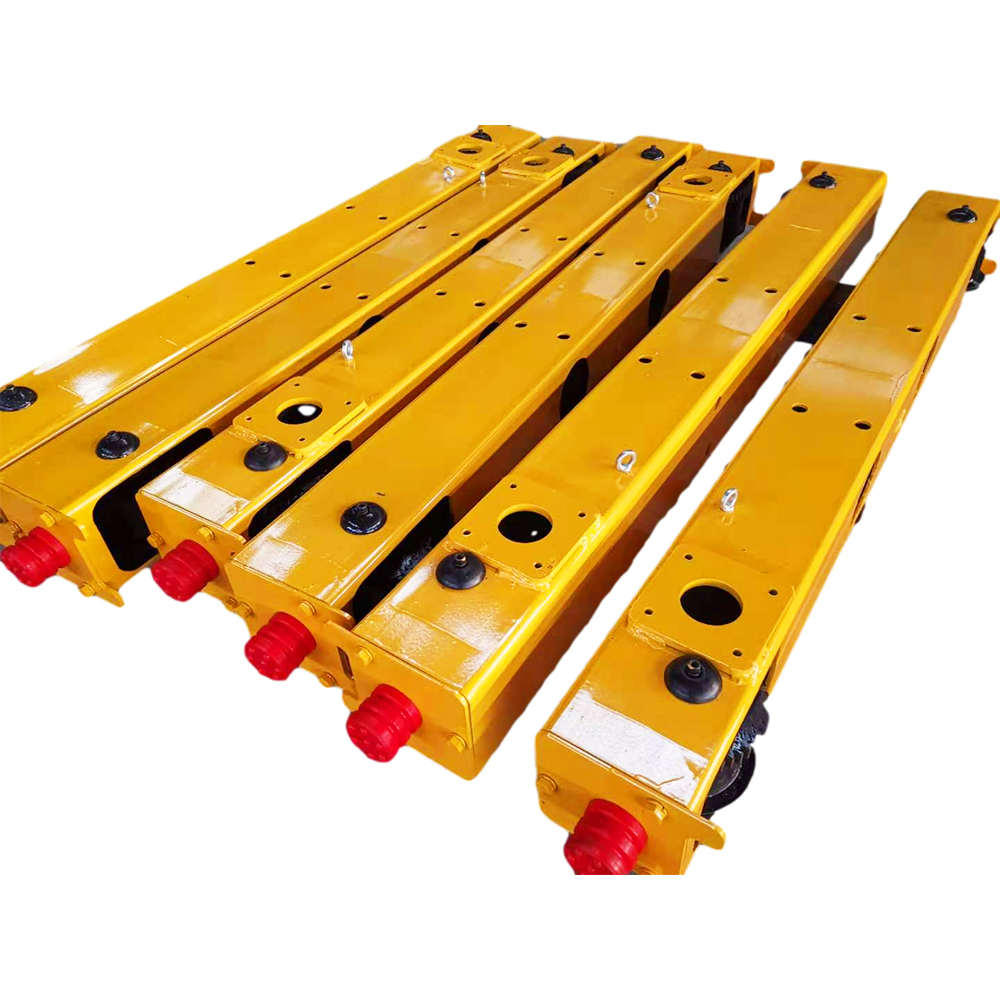
The crane end carriage, also called an end truck or end beam, is located at both ends of the crane bridge.
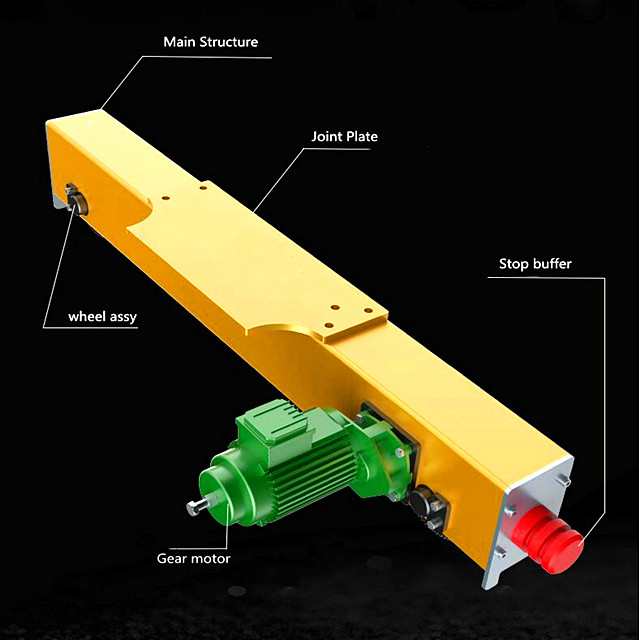
A typical end carriage includes:
- End carriage frame
- Traveling wheels
- Drive motor
- Gearbox
- Wheel axles
- Bearings
- Buffers
- Electrical components
The two end carriages support the bridge girder and transfer the crane loads to the runway rails through the wheels.
When the traveling motors operate, the wheels rotate and move the complete crane along the runway.
What Does a Crane End Carriage Do?
The main function of an end carriage is to provide reliable longitudinal movement for the overhead crane.
It performs several important jobs:
Supports the Crane Bridge
The end carriages carry the bridge girder and help transfer the crane’s dead weight and lifting loads to the runway.
Provides Crane Travel
Traveling wheels mounted on the end carriage allow the crane to move from one end of the workshop to the other.
Transfers Wheel Loads
The end carriage distributes the load through the wheels and rails. Wheel load is therefore an important parameter when designing the crane runway and end carriage.
Maintains Crane Alignment
Proper wheel positioning and frame accuracy help the crane travel smoothly and reduce problems such as skewing, excessive wheel wear, and rail wear.
Main Types of Crane End Carriages
End carriages can be designed in different configurations depending on the crane structure and application.
Single-Girder Crane End Carriage
Single-girder overhead cranes commonly use relatively compact end carriages.
The design is suitable for many light- and medium-duty material handling applications. The exact wheel arrangement depends on crane capacity, span, and duty class.
Double-Girder Crane End Carriage
Double-girder cranes normally require a stronger end carriage because of their higher structural loads and larger capacities.
The end carriage can be designed with multiple wheels and appropriate drive arrangements to distribute the load effectively.
European-Type End Carriage
European-style crane designs often use compact end carriages with integrated drive units.
A compact arrangement can help reduce the overall crane size and improve available lifting height, particularly when headroom is limited.
Crane End Carriage Wheels
The traveling wheels are one of the most important components of the end carriage.
Wheel selection depends on factors such as:
- Maximum wheel load
- Rail type
- Crane speed
- Wheel diameter
- Working frequency
- Operating environment
Wheels may be manufactured from suitable forged or cast materials and machined to the required dimensions.
Incorrect wheel selection can result in uneven wear, increased noise, rail damage, or poor crane travel.
How to Choose a Crane End Carriage
The end carriage should be selected as part of the complete crane system rather than as an isolated component.
1. Crane Capacity
The lifting capacity affects the vertical loads transferred through the bridge and end carriages.
2. Crane Span
A longer span can change the load distribution and structural requirements of the crane.
3. Wheel Load
Maximum wheel load is particularly important when checking the end carriage, traveling wheels, rails, and supporting structure.
4. Travel Speed
Higher crane travel speeds require suitable motors, gearboxes, wheels, brakes, and control systems.
5. Working Class
A crane operating continuously in a production plant has different requirements from a crane used occasionally.
The end carriage and traveling mechanism should therefore match the crane’s working duty.
6. Runway Rail
The rail size and profile need to match the traveling wheels. Rail alignment should also be considered during installation.
Common Problems With Crane End Carriages
Some operating problems can be traced to the end carriage or traveling system.
Uneven wheel wear may result from alignment problems, excessive wheel loads, or poor rail conditions.
Crane skewing can occur when the wheels or drive systems do not operate correctly.
Abnormal noise may indicate problems with bearings, gearboxes, wheels, or rail contact.
Rail wear can increase when wheel alignment is incorrect or the crane repeatedly travels under unsuitable conditions.
Regular inspection helps identify these problems before they lead to more expensive repairs.
Maintenance of Crane End Carriages
Routine maintenance is relatively straightforward but should not be ignored.
Inspect the following components regularly:
- Traveling wheels
- Wheel bearings
- Motors and gearboxes
- Brakes
- Buffers
- Wheel axles
- Bolted connections
- Electrical cables and connections
The runway rails should also be checked for alignment, damage, and excessive wear.
For cranes operating in dusty, humid, corrosive, or outdoor environments, inspection intervals may need to be adjusted according to actual conditions.
Crane End Carriage Price
The price of a crane end carriage depends on its design and technical configuration.
Important factors include:
- Crane capacity
- Wheel arrangement
- Wheel diameter
- Travel speed
- Motor and gearbox
- Working class
- Frame dimensions
- Rail type
- Quantity required
For replacement parts, it is useful to provide the original end carriage dimensions, wheel diameter, rail specification, crane capacity, and photographs when requesting a quotation.
Crane End Carriage from HY Crane
HY Crane provides crane components and lifting equipment for industrial applications, including end carriages for overhead crane systems.
End carriage configurations can be selected according to crane capacity, span, wheel load, travel speed, runway rail, and working conditions.
For a new crane or replacement project, providing the crane drawing and existing end carriage dimensions can help confirm the required configuration more accurately.
FAQ
What is a crane end carriage?
A crane end carriage is the supporting and traveling assembly located at each end of an overhead crane bridge. It carries the traveling wheels and drive mechanism.
Is an end carriage the same as an end truck?
In many crane applications, “end carriage” and “end truck” refer to essentially the same assembly.
Can I replace only the crane end carriage?
Yes, depending on the crane design. For replacement, the crane capacity, wheel size, rail specification, dimensions, and drive arrangement should be checked first.
How long does a crane end carriage last?
Service life depends on load, working frequency, wheel and rail conditions, maintenance, and operating environment. Regular inspection can help identify wear before major component failure occurs.
Post time: Sep-24-2026