



Global Installed Base of Overhead Cranes: Understanding the World’s Industrial Lifting Network
Overhead cranes have become an essential part of modern industry. From automotive factories and steel mills to warehouses and hydropower stations, they keep production moving by lifting and transporting heavy materials safely and efficiently.
As industrialization continues across both developed and emerging economies, the global installed base of overhead cranes has expanded steadily over the past few decades. Millions of crane systems are now operating worldwide, supporting manufacturing, logistics, construction, mining, energy, and infrastructure projects.
Understanding where these cranes are installed—and how demand is evolving—helps businesses make informed investment decisions when planning new facilities or upgrading existing equipment.
What Is the Installed Base of Overhead Cranes?
The installed base refers to the total number of overhead crane systems currently in operation, regardless of when they were manufactured.
Unlike annual sales figures, the installed base reflects the accumulated equipment operating across factories and industrial sites. Since most overhead cranes have a service life of 20 to 30 years—or even longer with proper maintenance—the installed base continues to grow as new cranes are commissioned while older systems remain in service.
This long operational lifespan also creates ongoing demand for modernization, spare parts, inspections, and retrofit solutions.
Industries with the Largest Installed Crane Population
Overhead cranes are used in almost every heavy industrial sector, but some industries account for a particularly large share of installations.
Manufacturing
Manufacturing plants rely on overhead cranes for handling raw materials, moving components between production lines, and loading finished products. Industries such as machinery, automotive, aerospace, and equipment manufacturing represent one of the largest user groups worldwide.
Steel and Metal Processing
Steel mills operate some of the most demanding crane applications. Heavy-duty cranes transport molten metal, steel coils, billets, slabs, and finished products under continuous operating conditions.
Power Generation
Hydropower stations, thermal power plants, nuclear facilities, and renewable energy projects all require overhead cranes for equipment installation, turbine maintenance, and routine servicing.
Warehousing and Logistics
As distribution centers become increasingly automated, overhead cranes are being integrated into specialized material handling systems for oversized goods and industrial storage operations.
Mining and Cement
Mining operations, cement plants, and bulk material handling facilities use cranes for equipment maintenance and production support in harsh working environments.
Regional Distribution of Overhead Crane Installations
Asia-Pacific
The Asia-Pacific region accounts for the largest share of installed overhead cranes. China, India, Japan, South Korea, and Southeast Asia continue to invest heavily in manufacturing capacity, infrastructure, and industrial automation.
Rapid factory construction and ongoing industrial upgrades have made this region the fastest-growing crane market over the past decade.
Europe
Europe has one of the world’s most mature crane markets. Many facilities operate cranes that have been in service for decades, with investments increasingly focused on modernization, energy efficiency, and intelligent monitoring systems rather than entirely new installations.
North America
Manufacturing, aerospace, automotive production, logistics, and heavy equipment industries continue to support a substantial installed crane base across the United States and Canada. Many companies are replacing aging equipment with higher-efficiency crane systems equipped with variable-frequency drives and smart diagnostics.
Middle East, Africa, and Latin America
Industrial development, mining, oil and gas, and infrastructure investment are driving steady growth in these regions. Although the installed base is smaller than in Asia or Europe, demand for reliable lifting equipment continues to increase.
Key Factors Driving Growth
Several long-term trends are expanding the global installed base of overhead cranes.
Industrial Automation
Manufacturers are integrating cranes into automated production systems to improve productivity and reduce manual handling.
Infrastructure Investment
Large-scale infrastructure projects—including railways, ports, power plants, and manufacturing parks—create sustained demand for new lifting equipment.
Factory Expansion
As production capacity increases worldwide, additional cranes are required to support larger workshops and higher throughput.
Equipment Modernization
Many companies choose to upgrade existing cranes with new hoists, electrical systems, remote controls, and safety technologies rather than replace the entire structure.
Emerging Technology Trends
Modern overhead cranes are becoming more intelligent and energy efficient than previous generations.
Key innovations include:
Variable frequency drive (VFD) control
Anti-sway technology
Remote monitoring and diagnostics
Predictive maintenance systems
Load positioning assistance
Energy-saving regenerative drives
IoT-enabled operational monitoring
Automated crane control for repetitive tasks
These technologies help improve productivity while reducing maintenance costs and downtime.
What This Means for Industrial Buyers
When planning a new facility or expanding production, selecting the right crane is only part of the investment decision. Buyers should also consider:
Future production growth
Duty classification
Maintenance accessibility
Spare parts availability
Energy consumption
Safety compliance
Local technical support
Equipment upgrade potential
Choosing a manufacturer with strong engineering capabilities and long-term service support can significantly reduce lifecycle costs.
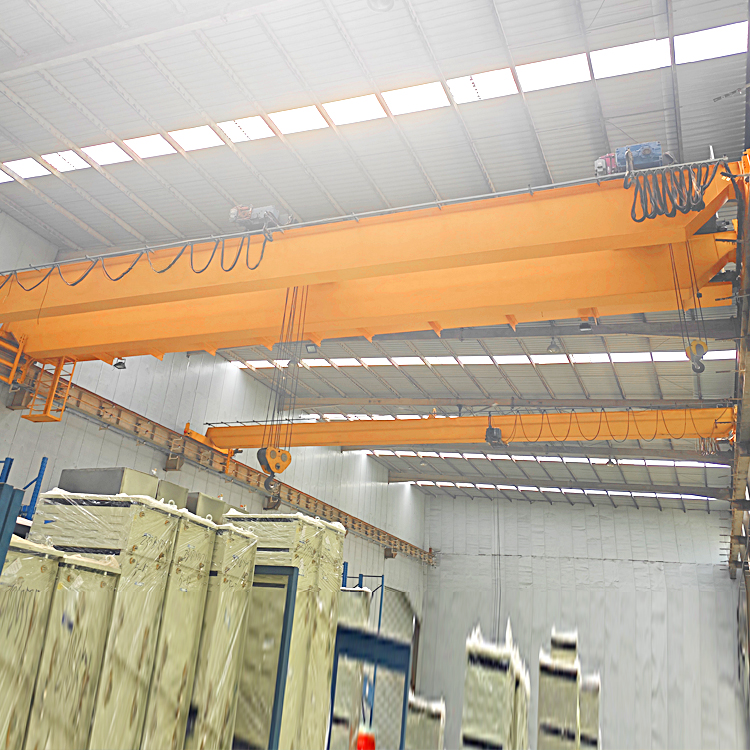
HY Cranes: Supporting Global Industrial Growth
As industrial investment continues worldwide, reliable lifting equipment remains essential for efficient material handling.
HY Cranes designs and manufactures a wide range of overhead cranes, including single girder, double girder, European-style, explosion-proof, and customized lifting systems for diverse industries. From equipment selection and engineering design to installation guidance and after-sales support, the company provides complete lifting solutions tailored to project requirements.
Whether for a new production facility or the modernization of an existing plant, selecting equipment designed for long-term performance helps maximize productivity and operational reliability.
Looking Ahead
The global installed base of overhead cranes is expected to continue expanding as manufacturing capacity grows, infrastructure investment increases, and factories adopt smarter production technologies.
At the same time, the focus is shifting from simply installing more cranes to operating them more efficiently. Digital monitoring, automation, predictive maintenance, and energy-saving technologies will play an increasingly important role in extending equipment life and improving overall plant performance.
For industrial companies worldwide, overhead cranes will remain one of the most important assets in modern material handling systems for decades to come.
Post time: Jun-26-2026