



Industrial Cranes for Loading and Unloading: Types and Selection Guide
Loading and unloading heavy materials is a daily task in factories, warehouses, steel yards, logistics centers, and construction sites. When loads are too heavy or large for forklifts, an industrial crane provides a safer and more efficient way to move them between trucks, storage areas, and production facilities.
The right crane depends on more than lifting capacity. Span, lifting height, working frequency, load dimensions, site layout, and operating environment all need to be considered.
Where Are Loading and Unloading Cranes Used?
Industrial cranes are used in many applications where heavy materials need to be transferred from one location to another.
Manufacturing Plants
Factories often receive steel plates, machinery parts, motors, molds, and other heavy components by truck. An overhead crane can unload these materials and move them directly to storage or production areas.
Warehouses and Logistics Centers
Heavy-duty warehouses may handle machinery, steel products, precast components, and other large loads. Overhead cranes can cover loading bays as well as internal storage areas.
Steel and Material Yards
Steel plates, beams, pipes, and fabricated structures often require lifting equipment with higher capacity. Gantry cranes are commonly used in outdoor yards because they have their own supporting legs.
Construction and Equipment Yards
Construction sites and equipment yards may need to load or unload machinery, steel structures, pipes, and concrete products. Mobile or gantry cranes can be considered when a permanent crane runway is not available.
Types of Industrial Cranes for Loading and Unloading
Different loading conditions require different crane configurations.
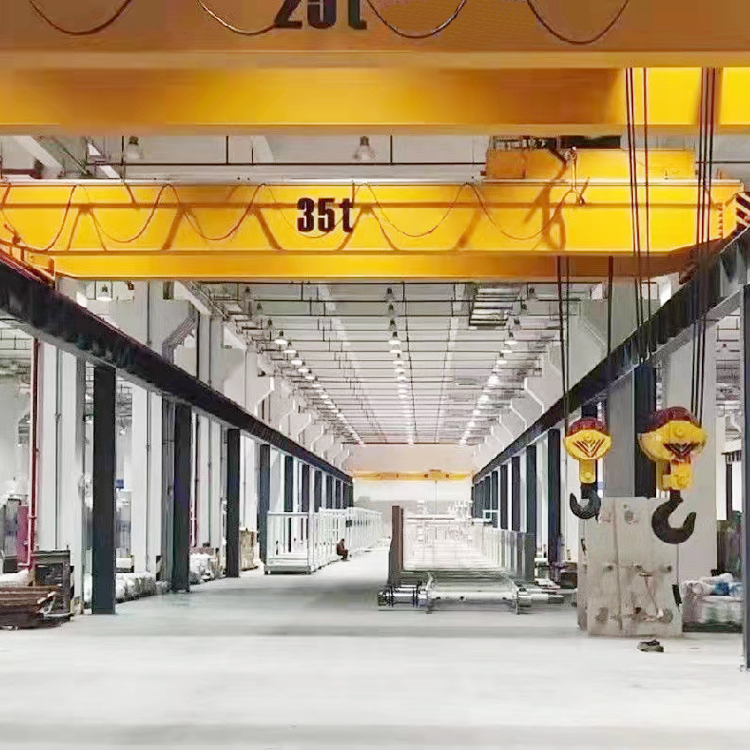
Overhead Cranes
Overhead cranes are widely used in factories and warehouses. The bridge runs along runway rails, while the hoist travels across the bridge.
Common types include:
- Single girder overhead crane
- Double girder overhead crane
- European-type overhead crane
- Top-running overhead crane
- Underhung crane
An overhead crane can often serve both the loading bay and nearby production areas.
Gantry Cranes
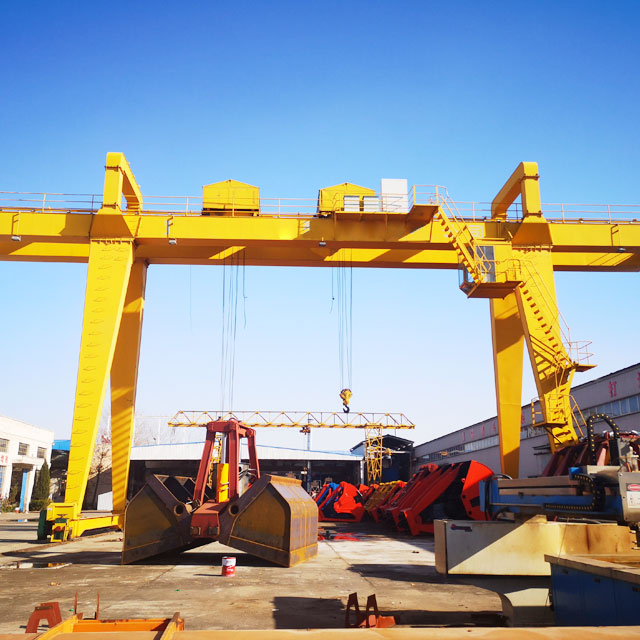
Gantry cranes have their own supporting legs and are suitable for outdoor material handling.
Typical applications include:
- Steel yards
- Precast concrete yards
- Machinery storage
- Construction sites
- Logistics yards
- Shipyards
Single-girder and double-girder designs are available according to the required capacity and span.
Jib Cranes
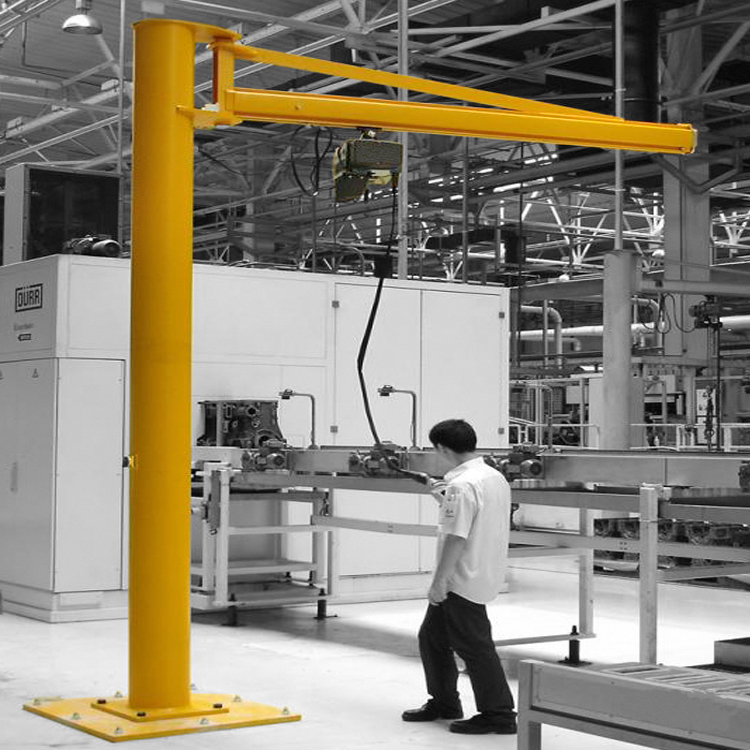
Jib cranes are designed for localized lifting. They can be installed beside a workshop entrance or loading area to move smaller loads between trucks and workstations.
Typical applications include machinery maintenance, component handling, and workstation loading.
Container Cranes
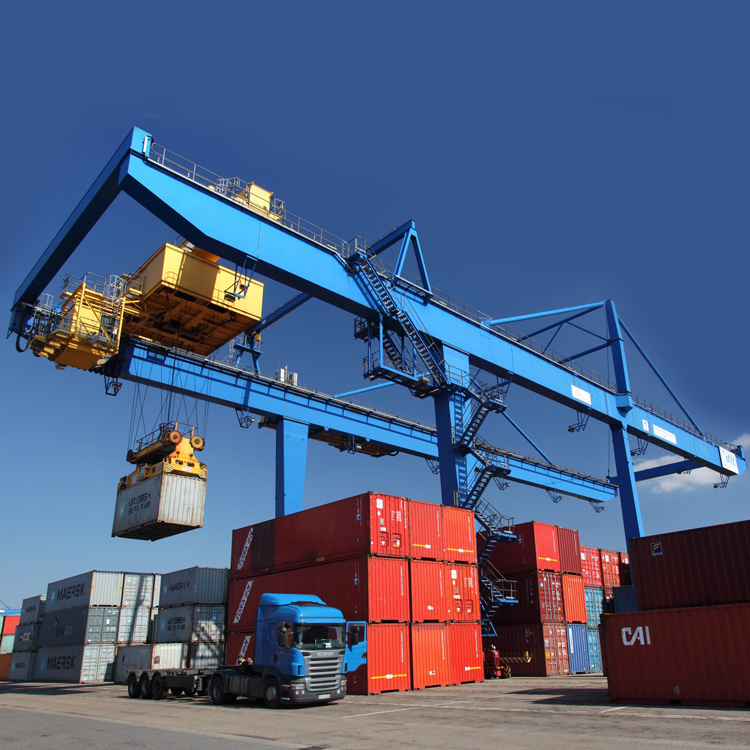
Container handling normally requires specialized equipment. RMG and RTG cranes are commonly used in container terminals, railway yards, and intermodal facilities. These cranes work with container spreaders designed for standard containers.
Overhead Crane or Gantry Crane?
The choice often depends on the site layout.
| Factor | Overhead Crane | Gantry Crane |
|---|---|---|
| Main use | Indoor factories and warehouses | Outdoor yards and open areas |
| Support | Building runway | Independent legs |
| Truck loading | Suitable with proper runway coverage | Suitable for outdoor loading |
| Installation | Requires suitable building structure | Less dependent on building structure |
| Working area | Fixed indoor area | Outdoor storage and loading areas |
Neither type is suitable for every project. The loading route and available space should be checked before selecting the crane.
How to Choose a Loading and Unloading Crane
1. Determine the Load Capacity
Start with the maximum load that the crane needs to lift. Also consider the weight of lifting beams, slings, clamps, spreaders, or other accessories where applicable.
2. Check Lifting Height
The hook must have enough height to clear the truck, cargo, doors, storage racks, and other obstacles.
3. Measure Span and Travel Distance
The crane span should cover the required loading area without unnecessary additional structure. The travel distance should match the actual material movement route.
4. Consider Working Frequency
A crane used occasionally has different requirements from one handling loads throughout every shift. Working frequency and duty class affect the selection of the crane structure, hoist, motor, and controls.
5. Check the Site Environment
Indoor and outdoor cranes face different conditions. Outdoor equipment may require additional consideration for wind, rain, temperature, corrosion, and ground conditions.
Crane Control Options
The control method should allow the operator to maintain a clear view of the load.
Pendant control is suitable for straightforward lifting operations.
Radio remote control gives the operator more freedom to choose a safe observation position and can be useful for truck loading.
Cabin control may be considered for larger cranes or operations where the operator needs a dedicated elevated position.
Safety During Loading and Unloading
Loading and unloading involves cranes, vehicles, loads, and workers in the same area. Basic safety measures include:
- Never exceed the crane’s rated capacity.
- Use suitable lifting accessories.
- Keep personnel away from suspended loads.
- Check load balance before lifting.
- Maintain sufficient clearance around trucks and structures.
- Inspect wire ropes, hooks, brakes, limit switches, and other safety components regularly.
- Consider wind protection for outdoor cranes.
A clear loading layout and defined operating procedure are just as important as the crane itself.
What Affects Industrial Crane Price?
The price of an industrial loading and unloading crane depends on its configuration. Important factors include:
- Lifting capacity
- Span and travel length
- Lifting height
- Crane type
- Hoist specification
- Duty class
- Control system
- Power supply
- Indoor or outdoor installation
- Optional safety equipment
For this reason, comparing cranes only by price per ton may not provide a useful comparison. The complete technical configuration should be considered.
HY Crane Industrial Crane Solutions
HY Crane supplies lifting equipment for factories, warehouses, yards, and other industrial applications.
Depending on the working conditions, solutions can include overhead cranes, gantry cranes, jib cranes, electric hoists, and container handling equipment.
For a loading and unloading project, customers can provide the load capacity, lifting height, span, travel distance, load type, working frequency, and site information. A site drawing or photos of the loading area can also help determine the appropriate crane configuration.
Conclusion
The right industrial crane for loading and unloading should match the actual material flow of the facility.
Overhead cranes are commonly used in workshops and warehouses, while gantry cranes are well suited to outdoor yards. Jib cranes can handle localized lifting, and specialized container cranes are used for container terminals and intermodal operations.
Before requesting a quotation, clearly define the load, lifting height, working area, operating frequency, and site conditions. This gives the crane manufacturer the information needed to develop a suitable solution.
FAQ
What crane is used for loading and unloading trucks?
Overhead cranes and gantry cranes are commonly used. The choice depends mainly on whether the loading area is indoors or outdoors and whether a suitable building structure is available.
Can an overhead crane unload a truck?
Yes. If the runway extends over the truck loading area and there is enough hook height and clearance, an overhead crane can be used for truck loading and unloading.
Is a gantry crane suitable for outdoor loading?
Yes. Gantry cranes are widely used in outdoor yards because they have independent supporting legs and do not rely on the building roof structure.
What information is needed for a crane quotation?
The basic information includes lifting capacity, lifting height, span, travel distance, load type, working frequency, power supply, and installation environment. A site drawing or photo is also useful.
Post time: Sep-18-2026