



A KBK light crane system is a modular lifting solution designed for efficient material handling at workstations, assembly lines, production areas, and workshops. Unlike conventional heavy-duty overhead cranes, KBK systems use standardized rail and suspension components that can be configured according to the layout and lifting requirements of a facility.
With a flexible modular structure, a KBK crane system can provide lifting and horizontal material movement while making better use of available workshop space.
What Is a KBK Light Crane System?
A KBK light crane system is a modular overhead material handling system consisting of profile rails, suspension components, trolleys, lifting equipment, and control systems.
The modular design allows different components to be combined into various configurations, including:
- KBK single girder suspension cranes
- KBK double girder suspension cranes
- KBK monorail systems
- KBK workstation cranes
- KBK flexible crane systems
- KBK jib crane configurations
The system can be designed for individual workstations or connected across multiple workstations to support material flow through a production process.
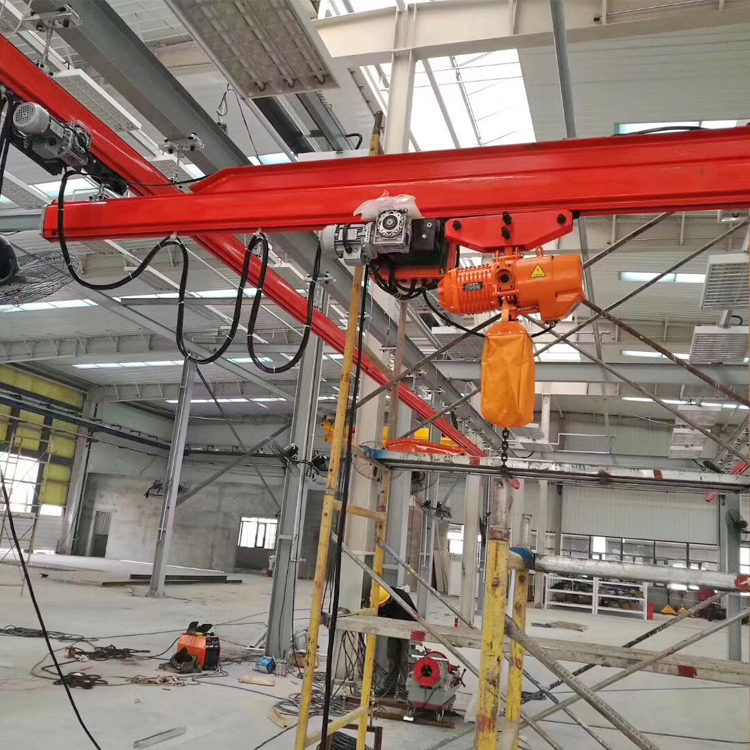
How Does a KBK Crane System Work?
The basic working principle is simple.
The KBK rail system is suspended from the workshop structure or installed on an independent supporting structure. A trolley travels along the profile rail, while an electric chain hoist or other lifting device raises and lowers the load.
This combination provides flexible movement of materials between different working positions.
For example, an operator can lift a component from a storage position, move it along the KBK rail, and accurately position it at an assembly workstation.
This makes KBK systems particularly useful for repetitive lifting and short-distance material handling.
Main Components of a KBK Light Crane System
A typical KBK system consists of several modular components.
1. KBK Profile Rail
The rail provides the traveling path for the trolley and forms the main structure of the lifting system. Steel and aluminum profile solutions are available depending on the application and required load capacity.
2. Suspension System
Suspension components connect the KBK rails to the workshop structure or independent supporting frames. Proper structural assessment and suspension design are important to ensure safe operation.
3. Trolley
The trolley travels along the rail and carries the lifting equipment. Depending on the configuration, the trolley can be manually or electrically operated.
4. Electric Hoist
An electric chain hoist is commonly used for workstation lifting applications. The hoist provides vertical lifting and lowering of the load.
5. Control System
Depending on the application, KBK cranes can use pendant controls, radio remote controls, or other control solutions.
Advantages of KBK Light Crane Systems
Modular and Flexible Design
One of the biggest advantages of a KBK light crane system is its modular design. Standard components can be combined to create different rail layouts and workstation configurations.
When production requirements change, the system can also be extended or modified more easily than many conventional fixed crane structures.
Efficient Use of Workshop Space
KBK systems can provide overhead material handling without occupying floor space with conventional runway columns. This allows the floor area to remain available for production equipment, workstations, storage, and personnel movement.
Suitable for Multiple Workstations
A single KBK system can be designed to serve several workstations. Rails can be arranged to follow the production process, helping operators move components between different working positions.
Smooth Material Handling
The combination of lightweight rails, traveling trolleys, and electric hoists provides flexible load movement for repetitive lifting operations.
This can help reduce manual handling and improve ergonomic conditions for workers.
Easy to Expand
As production lines change, additional rail sections, workstations, or lifting points can be incorporated into a properly designed modular system.
KBK Light Crane System Applications
KBK cranes are commonly used in industries where operators need to lift and move relatively light or medium loads repeatedly.
Typical applications include:
Automotive Manufacturing
For handling engines, components, tools, and parts during assembly.
Machinery Manufacturing
For moving machine components and workpieces between production stations.
Assembly Lines
For transferring components between different workstations.
Warehouses and Logistics Areas
For lifting and positioning products, tools, and materials at packing or handling stations.
Maintenance Workshops
For lifting motors, machine components, tools, and maintenance equipment.
Electronics Manufacturing
For workstation-level material handling where precise and flexible movement is required.
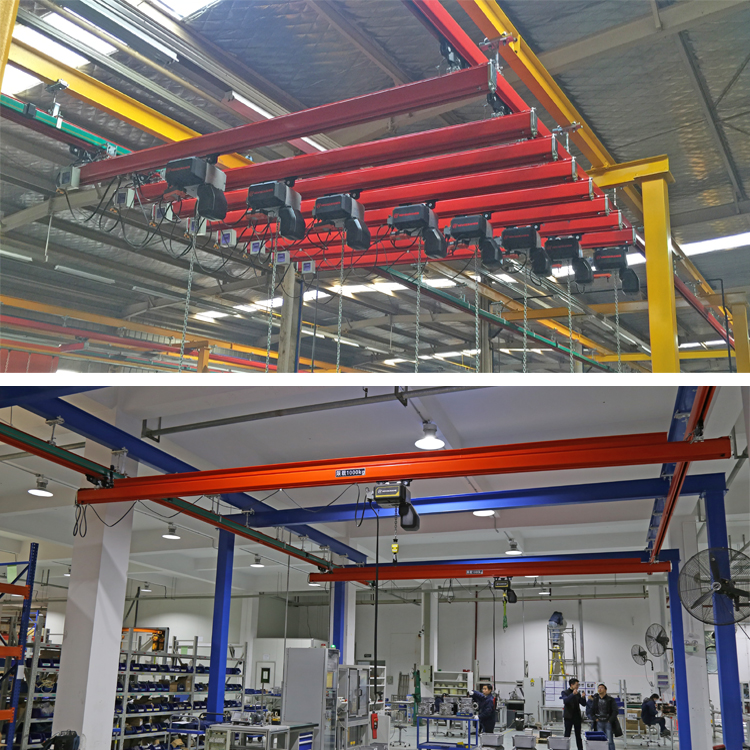
KBK Crane System vs. Conventional Overhead Crane
A KBK light crane system and a conventional overhead crane serve different material handling requirements.
A traditional overhead crane is generally selected when higher lifting capacities, larger spans, and broader workshop coverage are required.
A KBK system is more suitable when the application focuses on workstation lifting, flexible layouts, repetitive handling, and light-duty material movement.
| Feature | KBK Light Crane System | Conventional Overhead Crane |
|---|---|---|
| Main application | Workstations & production lines | Workshops & heavy material handling |
| Structure | Modular profile system | Structural bridge girder |
| Layout | Highly flexible | Generally fixed |
| Expansion | Relatively easy | Usually requires more engineering |
| Floor space | Can minimize floor obstructions | Runway/support structure may be required |
| Typical operation | Frequent workstation handling | General industrial lifting |
| Load range | Light to medium loads | Medium to heavy loads |
The right solution depends on the load capacity, working frequency, span, lifting height, building structure, and production process.
How to Choose the Right KBK Light Crane System
Before selecting a KBK system, several technical factors should be evaluated.
Load Capacity
Determine the maximum weight that needs to be lifted. The selected rail, trolley, hoist, and suspension system must be suitable for the required load.
Lifting Height
Consider the required hook height and the available clearance above the workstation.
Rail Layout
Determine whether the system needs a straight rail, single workstation bridge crane, multi-station system, or a more complex production-line layout.
Working Frequency
The frequency of lifting operations affects the selection of the hoist, trolley, controls, and overall crane duty.
Building Structure
For suspended KBK systems, the supporting building structure must be suitable for the additional loads. If the existing structure cannot provide adequate support, an independent supporting structure may be considered.
Working Environment
Temperature, dust, humidity, cleanliness requirements, and other environmental conditions should be considered when selecting materials and electrical components.
Why Choose HY Crane for KBK Crane Systems?
HY Crane provides customized material handling solutions for workshops, factories, assembly lines, and industrial facilities.
Our KBK light crane solutions can be configured according to the customer’s:
- Lifting capacity
- Lifting height
- Rail layout
- Workstation arrangement
- Working frequency
- Control method
- Operating environment
From a single workstation to a multi-station material handling system, the KBK configuration can be designed around the actual production process.
Conclusion
A KBK light crane system provides a flexible and efficient approach to workstation material handling. Its modular rail structure allows lifting systems to be configured for different workstations, assembly lines, and production layouts.
For facilities that need frequent lifting and short-distance material movement without installing a large conventional overhead crane, a KBK system can be an efficient option.
If you are planning a KBK crane system for your workshop or production line, contact HY Crane with your required lifting capacity, lifting height, workstation layout, and working conditions. Our engineers can help you select and configure a suitable light crane solution.
Post time: Aug-28-2026