



Material Handling Gantry Crane: How to Choose the Right Solution for Efficient Material Handling
Material handling is a critical part of modern manufacturing, logistics, steel processing, and outdoor storage operations. When heavy loads need to be moved safely and efficiently across large work areas, a material handling gantry crane provides a flexible and cost-effective lifting solution.
Unlike overhead cranes that rely on building-supported runways, gantry cranes operate on legs that travel on rails or wheels. This independent structure makes them ideal for facilities without overhead runway beams or for outdoor applications where large materials are stored and transported.
Whether you are planning a new production facility or upgrading an existing material handling system, selecting the right gantry crane can improve productivity, reduce manual labor, and lower long-term operating costs.
What Is a Material Handling Gantry Crane
A material handling gantry crane is a lifting system designed to transport heavy materials within industrial facilities, storage yards, ports, and manufacturing plants. It consists of a bridge beam supported by legs that travel along ground-mounted rails or rubber tires.
Depending on the application, the crane may be equipped with:
- Electric wire rope hoists
- Open winches
- Grab buckets
- Electromagnetic lifting magnets
- Spreader beams
- Vacuum lifting devices
- Customized lifting attachments
This versatility allows one crane to handle a wide variety of materials safely and efficiently.
Why Choose a Gantry Crane for Material Handling?
Many industrial facilities choose gantry cranes because they offer greater installation flexibility than overhead cranes.
Key advantages include:
- No need for building-supported runway beams
- Suitable for both indoor and outdoor applications
- Large lifting capacity
- Long travel distances
- Easy expansion of work areas
- Lower building modification costs
- Reliable performance in demanding environments
For facilities with limited building structures or expanding production lines, gantry cranes often provide the most practical lifting solution.
Common Applications of Material Handling Gantry Cranes
Manufacturing Plants
Manufacturers use gantry cranes to move:
- Steel structures
- Large machine components
- Fabricated assemblies
- Industrial molds
- Heavy equipment
The crane helps maintain smooth material flow between production stations while reducing dependence on forklifts.
Steel Processing Facilities
Steel service centers frequently handle:
- Steel plates
- Steel coils
- H-beams
- Pipes
- Structural sections
Special lifting devices such as magnets or C-hooks improve handling efficiency while protecting material surfaces.
Warehouses and Logistics Centers
Gantry cranes improve warehouse operations by transporting oversized cargo that exceeds forklift capacity.
Typical materials include:
- Heavy machinery
- Industrial equipment
- Containers
- Palletized loads
- Large fabricated products
Shipyards and Marine Facilities
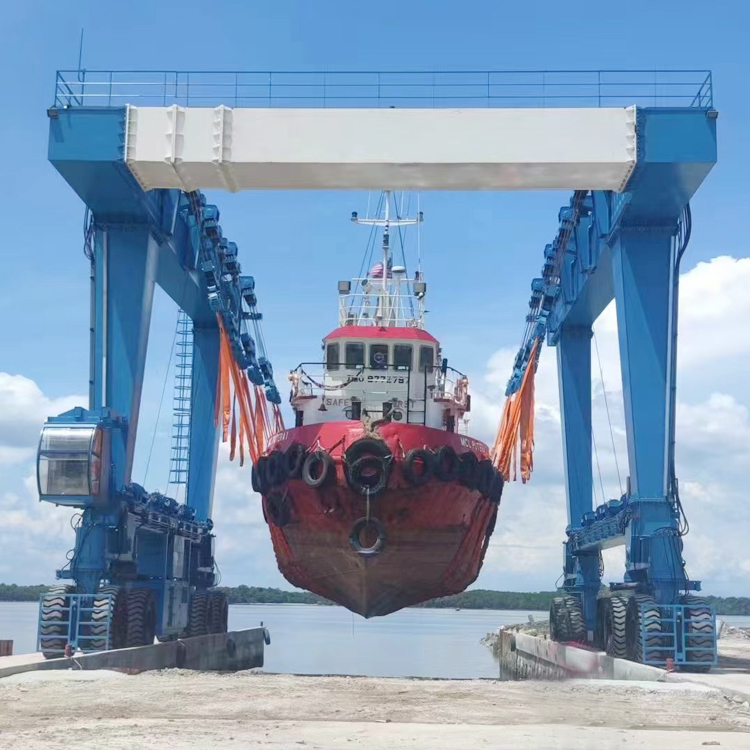
Shipyards rely on gantry cranes for:
- Hull assembly
- Engine installation
- Steel plate handling
- Module transportation
- Equipment maintenance
Outdoor operation requires corrosion-resistant coatings and weather-protected electrical systems.
Precast Concrete Plants
Concrete manufacturers use gantry cranes to transport:
- Bridge girders
- Concrete pipes
- Wall panels
- Box culverts
- Precast beams
Heavy-duty designs ensure stable lifting throughout continuous production.
Types of Material Handling Gantry Cranes
Single Girder Gantry Crane
Single girder gantry cranes are suitable for light and medium-duty applications.
Advantages include:
- Lower equipment cost
- Reduced structural weight
- Simple maintenance
- Easy installation
They are commonly used in workshops, warehouses, and fabrication facilities.
Double Girder Gantry Crane
Double girder gantry cranes provide:
- Higher lifting capacities
- Longer spans
- Better hook height
- Increased structural rigidity
- Multiple lifting configurations
These cranes are widely used in steel plants, heavy manufacturing, ports, and large infrastructure projects.
Semi-Gantry Crane
A semi-gantry crane combines one ground-supported leg with one runway-supported side.
It is an excellent solution for:
- Workshop extensions
- Factory edge operations
- Material transfer zones
This design maximizes floor space while minimizing structural modifications.
Rail Mounted Gantry Crane (RMG)
Rail mounted gantry cranes are commonly used in:
- Container terminals
- Railway freight yards
- Steel storage facilities
- Outdoor logistics centers
Their rail-guided travel provides accurate positioning and stable long-distance operation.
Rubber Tyred Gantry Crane (RTG)
RTG cranes travel on rubber tires instead of rails, making them suitable for facilities requiring flexible operating routes.
Common applications include:
- Container yards
- Intermodal terminals
- Large logistics centers
How to Select the Right Material Handling Gantry Crane
Selecting the correct crane requires more than knowing the maximum lifting capacity.
1. Determine Load Characteristics
Consider:
- Maximum load weight
- Load dimensions
- Center of gravity
- Lifting frequency
- Special lifting tools
The selected crane should safely handle both the load and all below-the-hook lifting devices.
2. Evaluate Site Conditions
Site conditions affect crane configuration.
Important factors include:
- Indoor or outdoor operation
- Available installation space
- Rail foundation quality
- Ground bearing capacity
- Wind conditions
- Ambient temperature
Proper site evaluation improves long-term reliability.
3. Match Crane Duty to Production
Continuous production requires higher-duty cranes than occasional maintenance lifting.
Evaluate:
- Daily operating hours
- Number of lifts per shift
- Travel distance
- Average load
- Future production expansion
Selecting the appropriate duty classification helps reduce maintenance costs and extend equipment life.
4. Choose the Right Lifting Mechanism
The lifting mechanism depends on the application.
Options include:
- Electric wire rope hoist
- Open winch trolley
- Grab bucket
- Electromagnetic magnet
- Vacuum lifter
Different materials require different lifting methods for maximum efficiency and safety.
5. Consider Automation
Modern gantry cranes can incorporate:
- Variable Frequency Drives (VFD)
- Remote control operation
- Anti-sway systems
- Automatic positioning
- PLC control
- Condition monitoring
Automation improves productivity while reducing operator fatigue.
Essential Safety Features
A quality material handling gantry crane should include:
- Overload protection
- Emergency stop system
- Upper and lower limit switches
- Wind alarm (outdoor cranes)
- Rail clamps
- Storm locking devices
- Anti-collision systems
- Rope protection devices
- Motor overload protection
These features contribute to safe and reliable operation.
Maintenance Tips for Long-Term Performance
Routine maintenance reduces unexpected downtime.
Recommended inspections include:
- Wire rope condition
- Brake performance
- Gear reducer lubrication
- Wheel wear
- Rail alignment
- Electrical connections
- Hook inspection
- Limit switches
- Structural bolts
Preventive maintenance extends service life and improves operational safety.
Why Choose HY Crane?
HY Crane provides customized material handling gantry cranes for customers worldwide.
Our solutions include:
- Single and double girder gantry cranes
- Rail mounted gantry cranes
- Semi-gantry cranes
- Rubber tyred gantry cranes
- Customized lifting attachments
- Engineering consultation
- Installation support
- Operator training
- Spare parts supply
- After-sales technical service
Every project begins with a detailed review of the customer’s working conditions, ensuring the crane is designed to meet actual production requirements rather than simply matching a rated capacity.
Conclusion
A material handling gantry crane is more than a lifting machine—it is an important part of an efficient material handling system. Choosing the right crane requires careful consideration of load characteristics, site conditions, operating frequency, safety requirements, and future production plans.
By selecting a crane that matches your application and investing in regular maintenance, businesses can improve productivity, reduce operating costs, and ensure reliable performance for many years.
If you are planning a new material handling project, providing detailed information about your load, span, lifting height, operating environment, and production requirements will help engineers recommend the most suitable gantry crane solution.
Frequently Asked Questions
What is a material handling gantry crane?
A material handling gantry crane is a ground-supported lifting system used to move heavy materials in factories, warehouses, shipyards, logistics centers, and outdoor storage yards. It operates on rails or rubber tires and does not require building-supported runways.
What is the difference between a gantry crane and an overhead crane?
An overhead crane runs on elevated runway beams attached to the building structure, while a gantry crane supports itself with legs that travel on rails or wheels. Gantry cranes are generally more suitable for outdoor sites or facilities without overhead runway support.
Which industries commonly use material handling gantry cranes?
They are widely used in steel fabrication, manufacturing, warehouses, logistics, shipbuilding, mining, precast concrete production, ports, and infrastructure projects.
How do I determine the required lifting capacity?
The rated capacity should include the maximum load, lifting accessories, hooks, spreader beams, magnets, or other below-the-hook devices, along with an appropriate safety margin.
What information should I provide before requesting a quotation?
For an accurate recommendation, provide:
- Required lifting capacity
- Span
- Lifting height
- Travel length
- Working environment
- Power supply
- Duty classification
- Operating frequency
- Load type
- Installation drawings (if available
Post time: Jul-31-2026